Topology
Local Development Modes
Alternatively referred to as standalone modes or single-node modes.
In local mode, all Lucille components are running in a single thread Java Process (JVM).
Lucille supports two types of local modes: Local or Kafka Local.
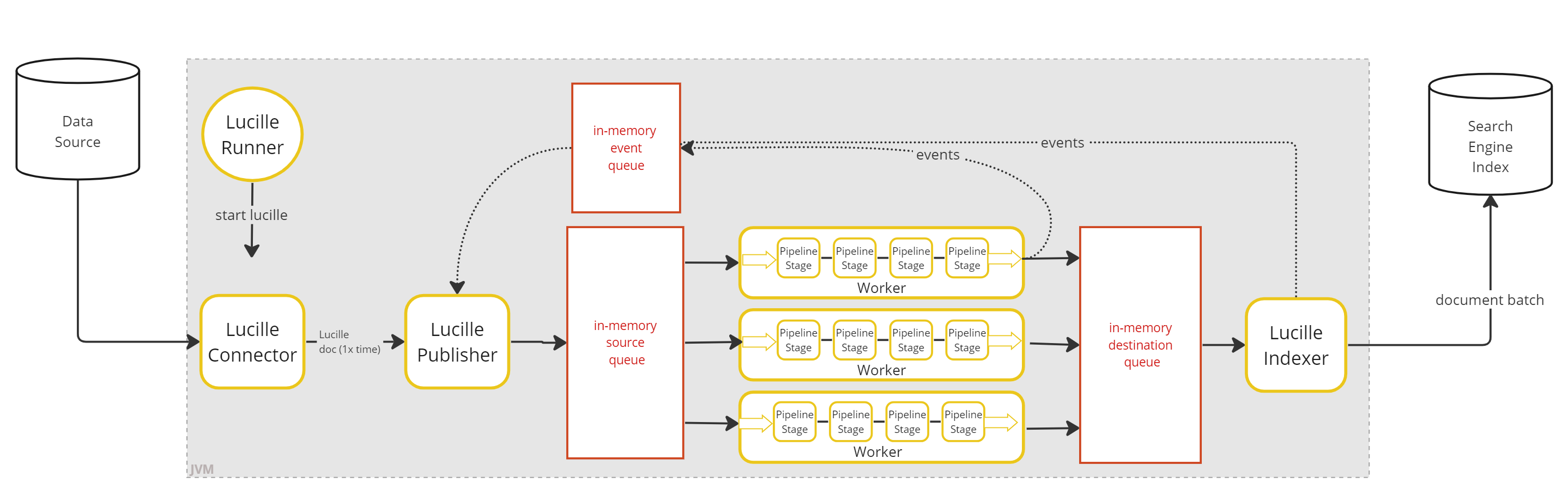
Local
A single process in the JVM. Intra-component (thread) communication is via an in-memory queue.
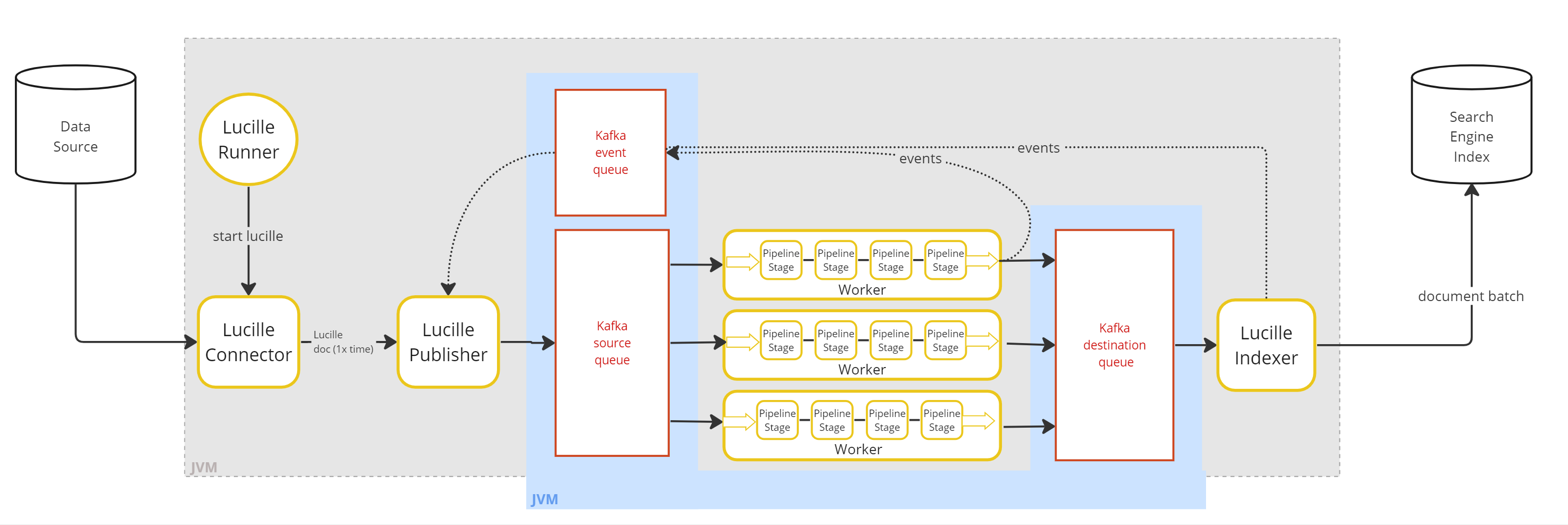
Kakfa Local
A single process in the JVM, with the exception of an externalized instance of Kafka. Intra-component (thread) communication is via Kafka.
Distributed Modes
Distributed modes are how Lucille scales. Kafka is utilized for message persistance/fault tolerance, and Lucille components run as multiple separate Java processes.
Fully Distributed
Best for batch ingest architecture.
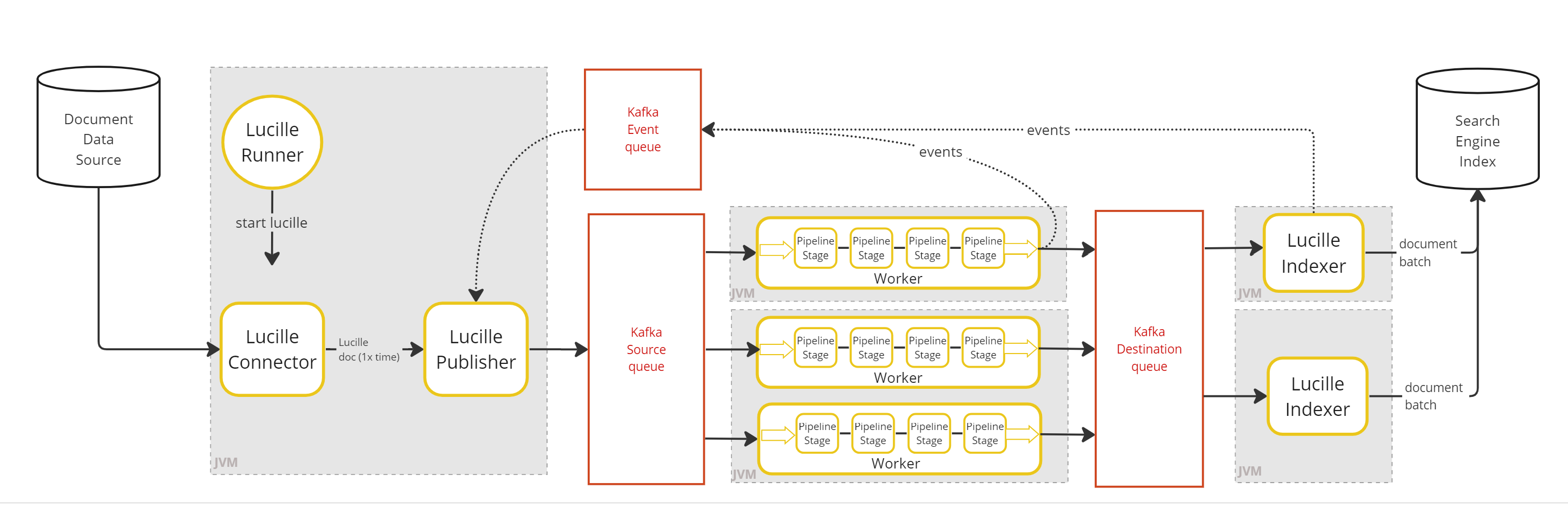
Connector/Publisher, Workers, and Indexers are all separate processes running in their own JVM. Intra-component communication is via externalized Kafka topics/queues. Events are being sent from the workers and indexers to a Kafka event topic. The events are being read by the Lucille Publisher.
Connector-less Distributed
Best for incremental ingest architecture.
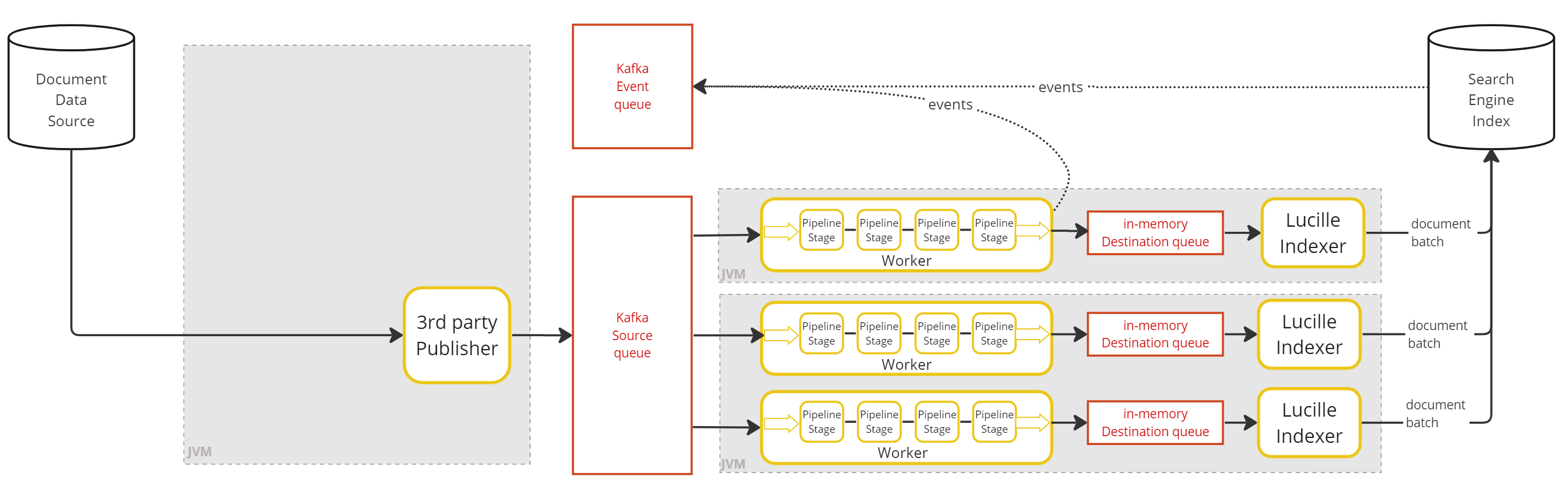
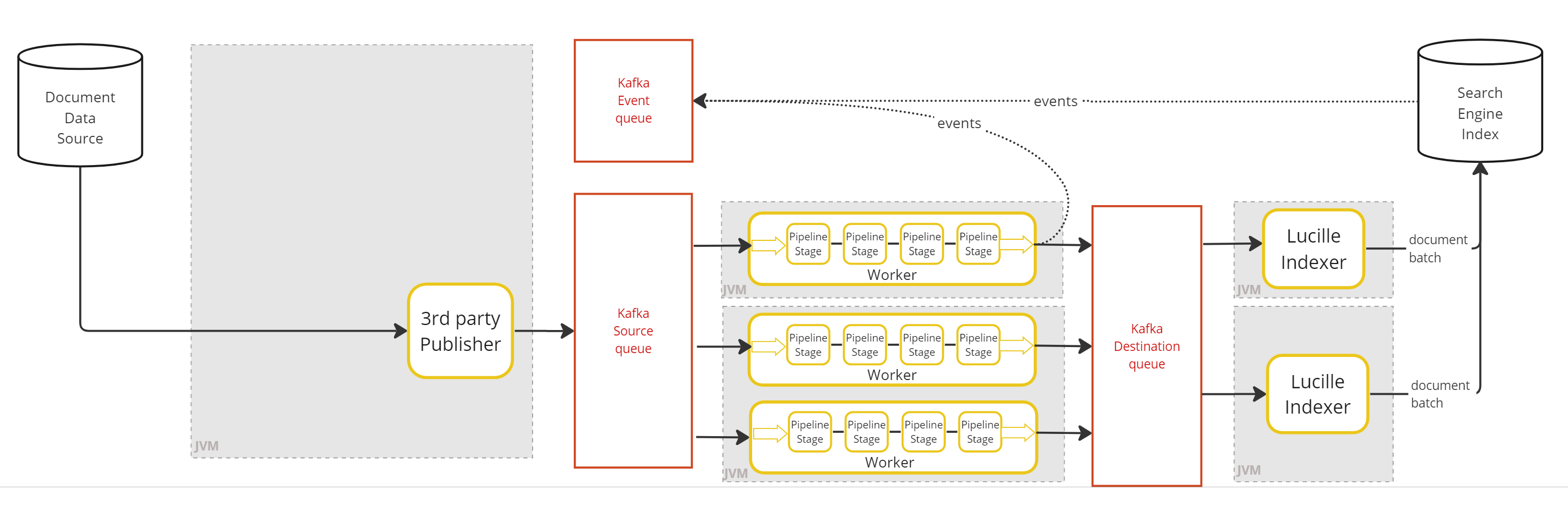
Similar to Fully Distributed Mode, but as the name implies, there is no Lucille Connector or Publisher. Instead, this mode supports an arbitrary 3rd party “publisher” feeding documents onto a Kafka Source queue - where the documents are then picked up by worker threads.
In this mode, events may be enabled and sent to a Kafka Event queue. In order to send events, the 3rd party publisher would be responsible for creating a run ID and stamping documents with this ID.
Hybrid
Best for streaming update architecture.
Similar to Connector-less Distibuted Mode. However, in hybrid mode worker threads are reading from a source Kafka topic and publishing to an in-memory queue read by a worker-indexer (an indexer paired with a worker).